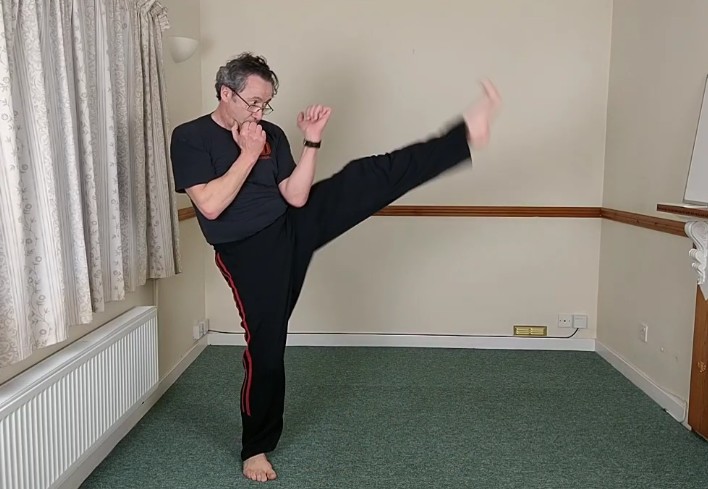
The dilemma between technique and toughness in fighting sports

We define combat sport a sport application or expression of a martial art where we set and impose rules to limit and control the amount of damage that can be inflicted to the opponent.

Ranging from contactless Karate tournament, via Boxing and all the way to MMA fighting sports usually assign points to each technique that scores and in many cases contemplate the eventuality of one of the opponent being knocked out (KO) or giving up the fight before the end and accepting defeat.

I am a strong fan of good technique and properly applied guard at all times: high quality technique will be more efficient in terms of using your energy as well as minimising your change of running out of it.  The guard, as I previously wrote about, will ensure you won’t be hit as often or as hard, reducing the chances for a KO from your opponent as well as minimising the points scored on you.  Most people I am teaching to are buying into this concept and accept that good technique must be there as a foundation to build on the remaining attributes of a winner.  A minority of others, being naturally aggressive and perhaps with a higher pain threshold, they assume they can just get in the ring let the opponent coming forward and aiming at knocking them down before the end of the fight.

From my point of view this is a strategy that is meant to be short lived and not guaranteeing a long career for a winner.  Here are my reasons for it:

  • Knocking somebody down, in a fight where both opponent are well trained and fit sports fighter is a small chance of hitting the right spot at the right time: it doesn’t happen often, particularly if your opponent has proper technique and guard;
  • Regardless how tough you are is just going to be time before you meet somebody tougher, somebody who has higher pain threshold, more adrenaline in their body and don’t go down as you expect;
  • If you are just aiming at the KO strike without a point based strategy two things can happen: you don’t succeed at your KO and the opponent wins because scoring more points or you become victim of your own strategy and get hit hard where it really hurts and get knocked down yourself;
  • Repeated hard strikes in the head cause long term disabilities and injuries so even if it doesn’t hurt now it will cause problems later.

Muhammad Ali was the first boxer that demonstrated that a fight could be won by playing by the rules, not looking for a fast KO but keep scoring on the opponent throughout the fight.  That doesn’t mean being a lower quality fighter but simply someone who is there to win, repeatedly, aiming at the top title.  Another demonstration of what I am stating here was the recent boxing fight of David Haye v Nikolai Valuev: the quality of the show was somehow not there as it can be seen in these videos.  Haye kept moving backward and away from his massive opponent Valuev but as he kept scoring with many, many points at the body, he won the world title.  That was a very well managed fight played strategically from beginning to end with the victory in mind.

I would like to conclude with a simple clarification: good technique is not just meant to look good, it’s meant to be very powerful, fast efficient and effective for the person using it.  At the same time when training for sport fighting you should always bear in mind what the rules are and understanding how you can win by scoring more points.  If the KO is allowed in your discipline and you can finish the fight before it may be a bonus but a good fighter is more likely to win more often than a tough one.

Posted under styles, theory

Written by massimo on 12 Jan 2010

Tags: , , , , , ,

Differences between Kickboxing and Thai Boxing

Many people, too many people, confuse Kickboxing with Thai Boxing (also called Muai Thai): perhaps it is because of the generalization that many schools do in defining any fighting sport that uses upper and lower body strikes (e.g. punches and kicks) as Kickboxing.  I used the term fighting sport to indicate a martial art that gets practiced according to some sport rules: these rules define, among other things, what can be used as a striking weapon and what areas of the opponent’s body can be hit.

In general the correct definition for Kickboxing is what is also called American Kickboxing, the style initially defined in the late sixties / early seventies as Full Contact Karate.  The pioneers of this sport where people like Bill Wallace, Joe Lewis and Benny Urquidez: they eventually renamed it Kickboxing to indicate a Boxing fight with added kicks when got into disagreement with the traditional Karate people that were (and are) still fighting with little or no contact.  Several other styles get called Kickboxing while being obviously something else: Thai Boxing, topic of this post, is the typical example but Savate, a French style with some obvious differences gets called Kickboxing and even Sanda, a sport application of Kung Fu gets sometimes called Chinese Kickboxing.

Although there are some very obvious differences between Kickboxing and Thai Boxing I will try to make them very obvious for the neophyte:

  • Kickboxing is American and Thai Boxing is Thai… not that easy to spot to the untrained observer but the most obvious aspect of this difference is in the uniform that is generally adopted although there are exceptions.  The former one uses (and imposes during tournaments) long trousers while the latter uses broad silk shorts, usually in very bright colours.
  • Kickboxing uses the same range of punches from standard IBF Boxing plus back fist and knife hand strike together with all most obvious kicks: front, side, round, axe and so on, including all variations of jumping, spinning back.  Thai Boxing allows all of the above and adds elbow and knee strikes: in reality knees are considered kind of preferential weapon and they tend to deliver a high percentage of the most devastating blows.
  • In Kickboxing you cannot grab and hold any of the opponents limbs or body parts: Thai Boxing allows for example grabbing the opponent’s leg and hold onto it while striking at the rest of the body; it is also allowed to clinch and strike at the same time.
  • Kickboxing’s techniques can land on the opponent’s torso, face and head: no strikes are allowed to the legs, back or back of the head.  Thai Boxing can strike everywhere excluding the groin area.
  • Kickboxing is practiced wearing full protection kit made of gloves, mouth guard, groin guard, shin and foot pad: Thai Boxing fighters wear just gloves, mouth and groin guard.
  • Kickboxing’s competitions can follow Semi, Light or Full contact rules: Thai Boxing just applies to Full contact.

Just because video are better than words, now that a bit of explanation has been offered please have a look at these two examples I found.  The first is a friendly demonstration fight between Bill Wallace and Dominique Valera: please notice the variety of techniques and how spectacular they look.  If they were in a competition they would have been less spectacular and much more violent:

The second video shows a Thai Boxing fight.  Although the number of techniques available to Thai Boxing fighters is larger than most of the other fighting sports the actual number of techniques effectively used is generally smaller:

I hope you enjoyed this post and the video I selected as examples: any comment is, as usual, highly appreciated.

Posted under styles, video_review

Written by massimo on 2 Sep 2009

Tags: , , ,

The importance of a proper guard

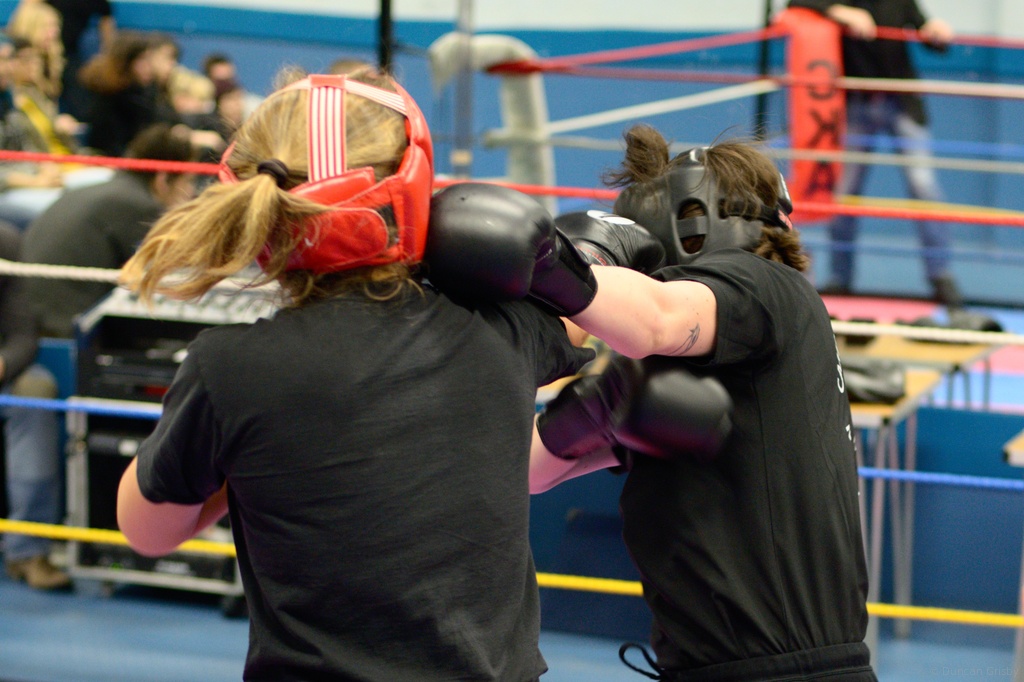
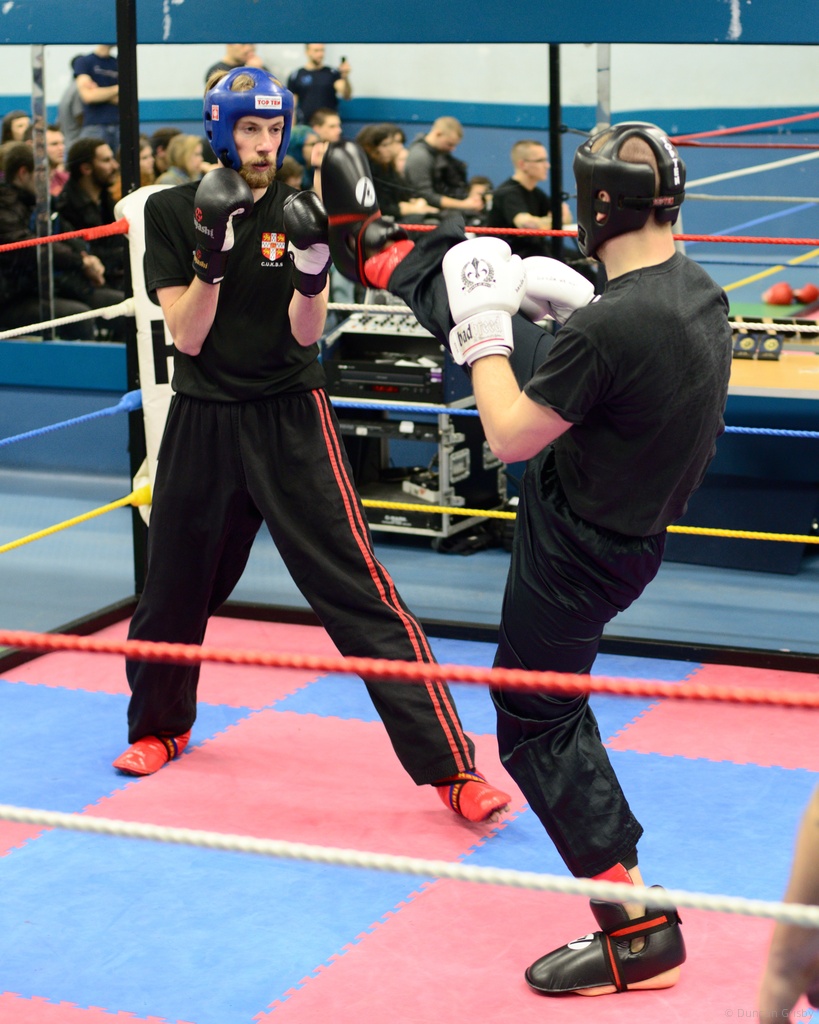
I have recently coached my students of Cambridge University Kickboxing Society in a Varsity match against Oxford and then the University Kickboxing Championship in Canterbury (Kent – UK) and I had the inspiration to write this post because of what I have seen: most people have little or no guard and, for my standard, are simply asking to be beaten up.  Both during Varsity fight and the Uni Champ, with over two hundred fighters, it was very rare to spot people that were holding a decent guard, lasting even for just a single round.  Let’s analyse the facts.

Copyright and courtesy of Duncan Grisby

Copyright and courtesy of Duncan Grisby

When in a contact fighting situation you are often at a short distance with an opponent who has a single goal: hitting you in every area allowed, in order to score as many points as possible.  This simple rule applies in the same way to boxers, any kind of kick boxers and any practitioner of other striking martial arts like karate or tae known do.   Having a poor guard can undermine the quality of your attacks because you become way more vulnerable to your opponent’s attacks or counter attacks and have painful consequences.

A guard position imposes the fighter to control where her hands and arms are while she is performing other techniques with her legs or ensuring that at least one hand is in the right position, close to the head to protect it from opponent’s strikes, while the other is striking.  Instinct and balance doesn’t suggest keeping the guard in place: it’s easier to stand if you spread your arms when kicking.  At the same time a martial artist is supposed to be a controlled and trained person that can suppress and control her instincts and use her training for the best performance.  What best performance?  Once you run out of evasive footwork, proper use of distance and active blocks I hope we all agree that a decent guard is the only defence you have against an attack: the only shield to protect your head, face or part of the body.  If you can strengthen some part of your torso and chest with serious conditioning and abdominal exercises the same cannot be said for the face and the head.

Copyright and courtesy of Duncan Grisby

Copyright and courtesy of Duncan Grisby

To some extent it is difficult for me to understand how and why people that teach kickboxing (in these cases) are spending long time at practicing conditioning, decent combinations of punches and kicks, ring strategy and so on without spending enough time to concentrate of keeping a decent guards all times.  However well your guard is trained it will perform worse when under great pressure.   When ever I am coaching a fighter more than 50% of all my suggestions are about keeping and closing the guard: that minimised her chance of being hit and she reduces the number of points scored on her and the risk of KO while she can save energy and be ready to strike back.

It’s more important to win 1-nil than 10-9: in the latter case you scored 10 points but 9 were scored on you.  Keeping a good guard will ensure to minimise the number of times your opponent scores on you.

Posted under educational, theory

Written by massimo on 3 Mar 2009

Tags: ,

The role of kicks in professional fights

I recently found this video (see at the bottom of the post) on YouTube and I was impressed simply because it’s rare to see somebody using his legs in such an efficient, powerful and effective way.
When I started karate and kick boxing, in the early eighties, it was noticeable a strong predominance in kicking techniques.  At that time people like Bill Wallace and Dominique Valera were dominating tournaments worldwide and most people entering competitions felt they had to be great kickers.  I remember my master going to seminars run by these legends of kick boxing and coming back with more and more tricks about strategies and combinations of kicks to be used in training and competitions.

Then, within a few years, a new generation of kick boxers started to populate the world.  These new people were not excellent kickers, not very flexible in the lower part of their body, so they started to develop techniques and strategies to use a minimum amount of kicks in any given fights while using more and more boxing techniques.

By definition a kick is a powerful technique: it delivers a lot more power and damage then a punch but it also uses a lot more energy and it’s usually slower.  These simple rules changed completely the trends in full contact and professional fights: in the last few years you can see all fights being dominated by good punching, a few round and front kicks and literally no much else.  In K1 or in MMA people tend to punch, kick and knee in the former or, often, looking for the grappling in the latter.

Nonetheless it’s nice to see that occasionally a good kicker enters the professional arena and when that happens he/she usually dominates for a some time, at least until a better kicker comes out or somebody studies very carefully how to avoid being kicked and defeat the kicker by using different techniques.

Posted under celebrities, styles, teaching, video_review

Written by massimo on 12 Oct 2008

Tags: , , , , ,