Quality of preparation and personal safety in Boxing

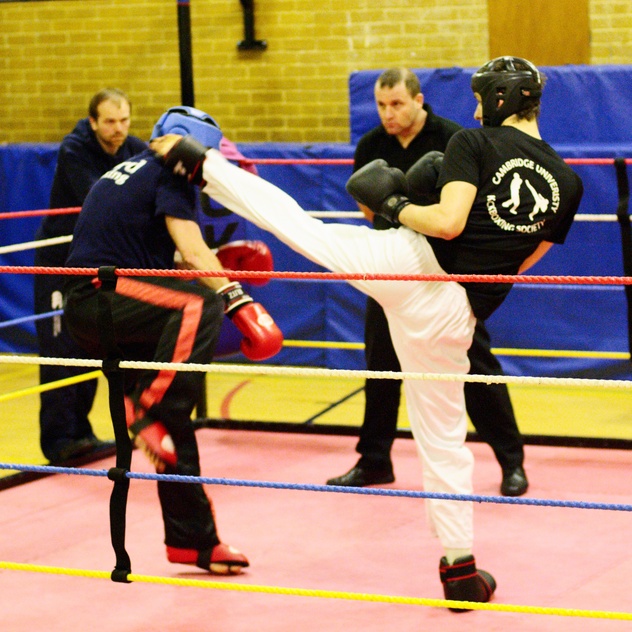
Last night I watched an amateur boxing fight just outside Cambridge and I was surprised and disappointed by the low quality of the technique in the majority of the fighters.  This post is not about me being disrespectful toward those young men that had enough courage to wear their gloves and enter the ring but more as a criticism toward coaches that dare sending inexperienced fighters to fight in a potentially very dangerous sport.

Boxing is a full contact fighting sport: this means that regardless the safety measures imposed by referee and judges each strike is meant to be thrown and hit at maximum power.  Considering that the preferred target for most strikes is the face and the side of the head it is obvious that damages and injuries are likely and frequent.

In more than one occasion, during last night’s 11 bouts fighters were bleeding, the referee was counting because they were loosing it and in two cases it was a clear knock out.  In fact since the beginning of one of the fights it was pretty obvious that the two guys had no idea about how technique should be and, apart from wearing gloves and shorts, they were pretty much fighting like in any street brawl on a Saturday night.  The referee even stopped the fight at some point in the second round to indicate that swinging punching like a bar fighter was not the way to go: just about 5 seconds after I made a comment about the fact that if one of those uncontrolled punched connected it would have been a KO when it just happened, bang.  The boxer fell on his side, unconscious and did not move at all for several seconds: referee and medical officer intervened and helped him recovering.  When he regained consciousness he was looking around with the typical expression of who doesn’t know where he is.

Perhaps I am from a dated, maybe even out of date, school and I value my students’ safety above anything.  Perhaps it is the fact that, in our case, when kicks are also used damages can be even worse: in any case I am pretty sure that I would have not put most of those fighters in a ring given their actual level of experience.  Fighting is not about being tough and fighting like a man: it’s about reaching the right level of preparation and quality of technique and having enough experience to avoid being slaughtered.

Posted under styles

Written by massimo on 31 Jan 2010

Tags: , , , ,

The dilemma between technique and toughness in fighting sports

We define combat sport a sport application or expression of a martial art where we set and impose rules to limit and control the amount of damage that can be inflicted to the opponent.

Ranging from contactless Karate tournament, via Boxing and all the way to MMA fighting sports usually assign points to each technique that scores and in many cases contemplate the eventuality of one of the opponent being knocked out (KO) or giving up the fight before the end and accepting defeat.

I am a strong fan of good technique and properly applied guard at all times: high quality technique will be more efficient in terms of using your energy as well as minimising your change of running out of it.  The guard, as I previously wrote about, will ensure you won’t be hit as often or as hard, reducing the chances for a KO from your opponent as well as minimising the points scored on you.  Most people I am teaching to are buying into this concept and accept that good technique must be there as a foundation to build on the remaining attributes of a winner.  A minority of others, being naturally aggressive and perhaps with a higher pain threshold, they assume they can just get in the ring let the opponent coming forward and aiming at knocking them down before the end of the fight.

From my point of view this is a strategy that is meant to be short lived and not guaranteeing a long career for a winner.  Here are my reasons for it:

  • Knocking somebody down, in a fight where both opponent are well trained and fit sports fighter is a small chance of hitting the right spot at the right time: it doesn’t happen often, particularly if your opponent has proper technique and guard;
  • Regardless how tough you are is just going to be time before you meet somebody tougher, somebody who has higher pain threshold, more adrenaline in their body and don’t go down as you expect;
  • If you are just aiming at the KO strike without a point based strategy two things can happen: you don’t succeed at your KO and the opponent wins because scoring more points or you become victim of your own strategy and get hit hard where it really hurts and get knocked down yourself;
  • Repeated hard strikes in the head cause long term disabilities and injuries so even if it doesn’t hurt now it will cause problems later.

Muhammad Ali was the first boxer that demonstrated that a fight could be won by playing by the rules, not looking for a fast KO but keep scoring on the opponent throughout the fight.  That doesn’t mean being a lower quality fighter but simply someone who is there to win, repeatedly, aiming at the top title.  Another demonstration of what I am stating here was the recent boxing fight of David Haye v Nikolai Valuev: the quality of the show was somehow not there as it can be seen in these videos.  Haye kept moving backward and away from his massive opponent Valuev but as he kept scoring with many, many points at the body, he won the world title.  That was a very well managed fight played strategically from beginning to end with the victory in mind.

I would like to conclude with a simple clarification: good technique is not just meant to look good, it’s meant to be very powerful, fast efficient and effective for the person using it.  At the same time when training for sport fighting you should always bear in mind what the rules are and understanding how you can win by scoring more points.  If the KO is allowed in your discipline and you can finish the fight before it may be a bonus but a good fighter is more likely to win more often than a tough one.

Posted under styles, theory

Written by massimo on 12 Jan 2010

Tags: , , , , , ,

My toughts about Tae Kwon Do

Finding a Tae Kwon Do class is usually very easy, in most places and for this reason I have practiced Tae Kwon Do (TKD) in a number of locations around the world (UK, Indonesia, Antilles, Spain) and I was lucky enough to train several times with some top experts, exchanging, apart from punches and kicks, opinions and ideas about the pros and cons of this art.

Description

TKD is a traditional, striking martial art based on kicks and punches although the focus is mainly on the formers.  By traditional I mean having a structured format for the class, naming techniques in the original language and a strict code of conduct and discipline about addressing the master and interacting with fellow students.  TKD practitioners use a white Gi similar to the use used by other martial art although the top is usually a V-neck shirt rather than a traditional jacket.  Seen from the outside TKD manifest itself with two opponents facing each other and attacking body or the head with either kicks or punches with the aim of scoring or eventually knocking down the opponent.  TKD originated in South Korea where it happens to be the national sport and it is one of the most popular martial arts in the world: it was also the second Eastern martial art to become an Olympic sport after Judo.  TKD is represented in many different styles and it is organised world wide in a number of different associations that all practice styles that are all slightly different from each other.  The two main associations are WTF and ITF.  TKD is also often referred as the Korean Karate: this is a wrong definition because the two arts are substantially different although the original definition of Kara Te (in Japanese translated as empty hand, intending to fight without weapons) can be applied to TKD as well.

History

Martial arts are usually not invented from scratch but defined by a person that, after studying and practicing other styles, puts together some aspects of those and give to the new art/style a new name, identity, set of rules and etiquette.  TKD followed exactly this route by being a merge of several ancient arts from Korea and the neighbouring countries, with a strong influence from Karate.  The person considered being the father and highly respected founder of TKD was General Choi Hong Hi who was an experienced martial artist from South Korea: he had the opportunity of studying Karate while living in Japan during the Japanese occupation of South Korea and he defined TKD in the late 50es. General Choi also founded ITF in 1966.

What I like about TKD

Practicing TKD develops some of best, fastest and most powerful kicking techniques and if you fight experts of TKD be careful about their legs: that’s where most if not all of their attacks are likely to come from.  TKD training aims at developing a great level of flexibility for the legs and most drills are meant to combine kicks from both the front and rear legs in very fast sequences.  TKD also encourages using many jumping kicks to achieve higher target and, again, allowing attacks from a broader range of angles.  All kicks are practiced at full contact so each strike is very powerful.

What I don’t like about TKD

In my opinion kicks are fantastic weapons and deliver lot of damage: at the same time punches must have a role in a fight because when the distance is too short it’s important to have means of attacking and defending against hand strikes.  The fact that even in Olympic competitions it is allowed to kick the head at full power with but just light contact with punches the whole style develops with rather poor guard. Assuming that kicks will solve all situations most TKD practitioners put little emphasis on a proper guard that protects the head from punches.  Given the level of leg flexibility expected by high kicks, TKD is most suitable for people that are naturally flexible and start training at a young age: in my experience I never met anyone that achieved a decent level of proficiency in TKD when starting in their thirties or forties.  Last by not least: in a self defence situation high kicks are always a dangerous option to go for and they cannot be used when you attacker is already close to you.  Therefore the applicability of TKD in a self defence situation is lower than many other styles available.

Conclusions

I think TKD is an excellent martial art that teaches powerful techniques: I find it incomplete due to poor hand strikes repertoire.  I would suggest it as a good first martial art, particular for children and young people because it instils discipline and respect while I would rule out beginners in their thirties and above for the reasons I explained above.

Posted under styles

Written by massimo on 6 Nov 2009

Tags: ,

Hook kick: 5 good reasons to hit with the ball of the foot

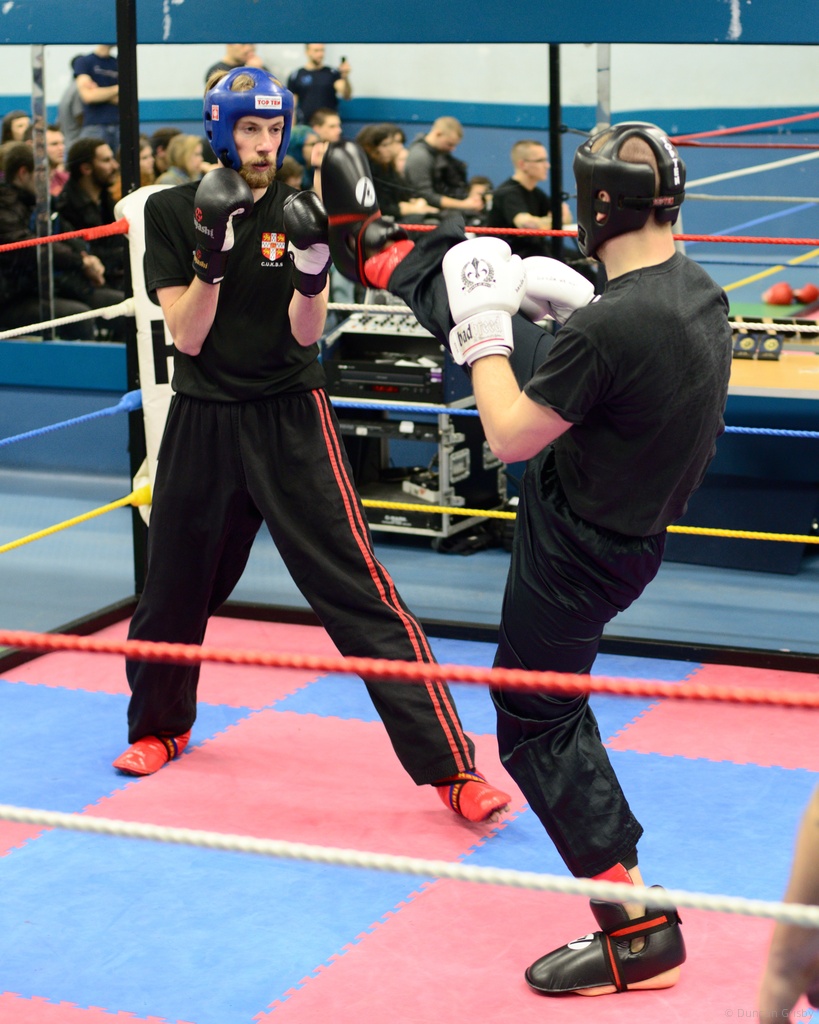
Courtesy and Copyright © Duncan Grisby 2006

Courtesy and Copyright © Duncan Grisby 2006

Different schools and styles of martial arts teach the hook kick (also called reversed round kick) in different ways. Main differences manifest essentially in the way the movement originates, how the kicking leg is moving during the kick and what part of the foot hits the target that can be the hill or the sole/ball of the foot.

When I teach how to perform a hook kick, I first clarify that to maximise performance the leg should follow a whipping movement to ensure maximum acceleration of the foot toward the target.

I also suggest to always hit with the ball of the foot. Here are for 3 good reasons both physiological and in terms of pure performance for doing that rather than the (side of the) hill, keeping the foot at 90° to the ankle:

  1. better reach: having the foot extended it increases your range by nearly the full length of your foot ensuring you will hit, from the same position, targets that would not be reachable if you bend your foot.
  2. stronger impact: if the angular speed of the leg moving is constant having a longer weapon (by the length of the foot) increases the speed of the foot itself, build up a higher momentum and delivers a stronger kick..
  3. safer for you: the Achilles’ tendon is a weak point and if you squash it against a skull it will hurt your foot to the point you might not be able of walking for some time. Even if the impact is not straight on the Achilles’ tendon it can still hit the many nerves that are exposed both on the internal and external part of the hill, moving toward the ankle. The ball of the foot is very well padded and can bear much stronger impact than the edge of the hill.
  4. improve flexibility: with the full fully extended the natual flexibility of the leg is highly helped; to the contrary trying to extend a leg while the tibial (shin) muscles are tensed in order to keep the ankle at 90° will have some groups of muscles that are fighting against the direction of your kick getting the muscles behind the leg less prone to extend
  5. faster: if all muscles involved in the movement are pushing in the same direction and the others are simply relaxed the overall speed will be improved.

In terms of pure power the hook kick is not to be considered at the top of the scale where round kick and other forward kicks can develop much stronger impact. Things change when spinning backward where the whole spinning momentum adds up to the actual mechanical movement of the kick itself.

Extra information about the hook kick can be found by checking this video:

As usual, any comment is highly appreciated.

Posted under educational, styles, video_review

Written by massimo on 13 Oct 2009

Differences between Kickboxing and Thai Boxing

Many people, too many people, confuse Kickboxing with Thai Boxing (also called Muai Thai): perhaps it is because of the generalization that many schools do in defining any fighting sport that uses upper and lower body strikes (e.g. punches and kicks) as Kickboxing.  I used the term fighting sport to indicate a martial art that gets practiced according to some sport rules: these rules define, among other things, what can be used as a striking weapon and what areas of the opponent’s body can be hit.

In general the correct definition for Kickboxing is what is also called American Kickboxing, the style initially defined in the late sixties / early seventies as Full Contact Karate.  The pioneers of this sport where people like Bill Wallace, Joe Lewis and Benny Urquidez: they eventually renamed it Kickboxing to indicate a Boxing fight with added kicks when got into disagreement with the traditional Karate people that were (and are) still fighting with little or no contact.  Several other styles get called Kickboxing while being obviously something else: Thai Boxing, topic of this post, is the typical example but Savate, a French style with some obvious differences gets called Kickboxing and even Sanda, a sport application of Kung Fu gets sometimes called Chinese Kickboxing.

Although there are some very obvious differences between Kickboxing and Thai Boxing I will try to make them very obvious for the neophyte:

  • Kickboxing is American and Thai Boxing is Thai… not that easy to spot to the untrained observer but the most obvious aspect of this difference is in the uniform that is generally adopted although there are exceptions.  The former one uses (and imposes during tournaments) long trousers while the latter uses broad silk shorts, usually in very bright colours.
  • Kickboxing uses the same range of punches from standard IBF Boxing plus back fist and knife hand strike together with all most obvious kicks: front, side, round, axe and so on, including all variations of jumping, spinning back.  Thai Boxing allows all of the above and adds elbow and knee strikes: in reality knees are considered kind of preferential weapon and they tend to deliver a high percentage of the most devastating blows.
  • In Kickboxing you cannot grab and hold any of the opponents limbs or body parts: Thai Boxing allows for example grabbing the opponent’s leg and hold onto it while striking at the rest of the body; it is also allowed to clinch and strike at the same time.
  • Kickboxing’s techniques can land on the opponent’s torso, face and head: no strikes are allowed to the legs, back or back of the head.  Thai Boxing can strike everywhere excluding the groin area.
  • Kickboxing is practiced wearing full protection kit made of gloves, mouth guard, groin guard, shin and foot pad: Thai Boxing fighters wear just gloves, mouth and groin guard.
  • Kickboxing’s competitions can follow Semi, Light or Full contact rules: Thai Boxing just applies to Full contact.

Just because video are better than words, now that a bit of explanation has been offered please have a look at these two examples I found.  The first is a friendly demonstration fight between Bill Wallace and Dominique Valera: please notice the variety of techniques and how spectacular they look.  If they were in a competition they would have been less spectacular and much more violent:

The second video shows a Thai Boxing fight.  Although the number of techniques available to Thai Boxing fighters is larger than most of the other fighting sports the actual number of techniques effectively used is generally smaller:

I hope you enjoyed this post and the video I selected as examples: any comment is, as usual, highly appreciated.

Posted under styles, video_review

Written by massimo on 2 Sep 2009

Tags: , , ,