The dilemma between technique and toughness in fighting sports

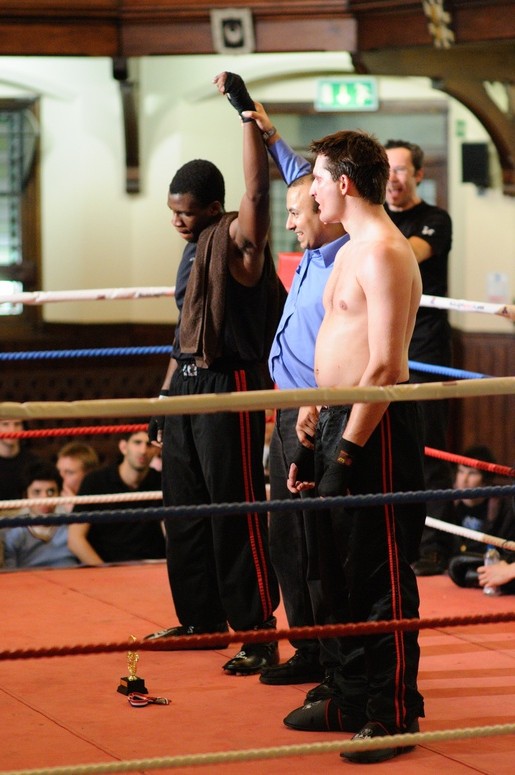
We define combat sport a sport application or expression of a martial art where we set and impose rules to limit and control the amount of damage that can be inflicted to the opponent.

Ranging from contactless Karate tournament, via Boxing and all the way to MMA fighting sports usually assign points to each technique that scores and in many cases contemplate the eventuality of one of the opponent being knocked out (KO) or giving up the fight before the end and accepting defeat.

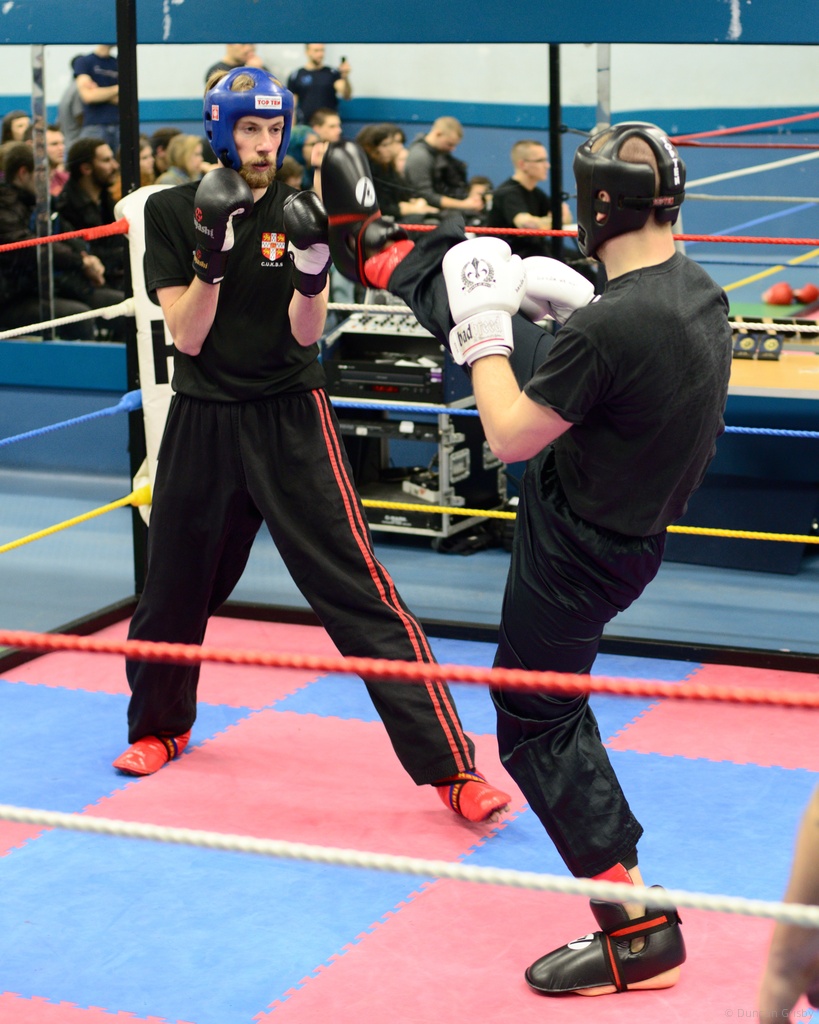
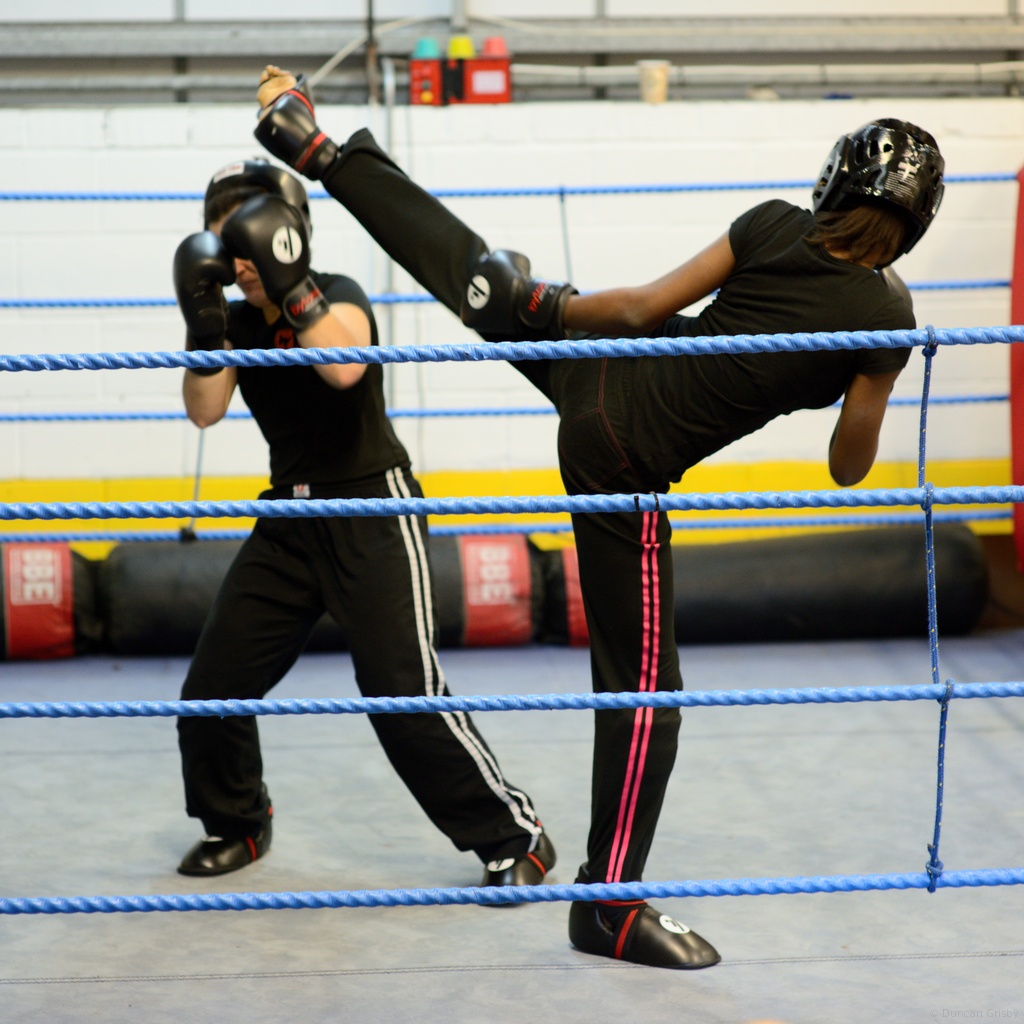
I am a strong fan of good technique and properly applied guard at all times: high quality technique will be more efficient in terms of using your energy as well as minimising your change of running out of it.  The guard, as I previously wrote about, will ensure you won’t be hit as often or as hard, reducing the chances for a KO from your opponent as well as minimising the points scored on you.  Most people I am teaching to are buying into this concept and accept that good technique must be there as a foundation to build on the remaining attributes of a winner.  A minority of others, being naturally aggressive and perhaps with a higher pain threshold, they assume they can just get in the ring let the opponent coming forward and aiming at knocking them down before the end of the fight.

From my point of view this is a strategy that is meant to be short lived and not guaranteeing a long career for a winner.  Here are my reasons for it:

  • Knocking somebody down, in a fight where both opponent are well trained and fit sports fighter is a small chance of hitting the right spot at the right time: it doesn’t happen often, particularly if your opponent has proper technique and guard;
  • Regardless how tough you are is just going to be time before you meet somebody tougher, somebody who has higher pain threshold, more adrenaline in their body and don’t go down as you expect;
  • If you are just aiming at the KO strike without a point based strategy two things can happen: you don’t succeed at your KO and the opponent wins because scoring more points or you become victim of your own strategy and get hit hard where it really hurts and get knocked down yourself;
  • Repeated hard strikes in the head cause long term disabilities and injuries so even if it doesn’t hurt now it will cause problems later.

Muhammad Ali was the first boxer that demonstrated that a fight could be won by playing by the rules, not looking for a fast KO but keep scoring on the opponent throughout the fight.  That doesn’t mean being a lower quality fighter but simply someone who is there to win, repeatedly, aiming at the top title.  Another demonstration of what I am stating here was the recent boxing fight of David Haye v Nikolai Valuev: the quality of the show was somehow not there as it can be seen in these videos.  Haye kept moving backward and away from his massive opponent Valuev but as he kept scoring with many, many points at the body, he won the world title.  That was a very well managed fight played strategically from beginning to end with the victory in mind.

I would like to conclude with a simple clarification: good technique is not just meant to look good, it’s meant to be very powerful, fast efficient and effective for the person using it.  At the same time when training for sport fighting you should always bear in mind what the rules are and understanding how you can win by scoring more points.  If the KO is allowed in your discipline and you can finish the fight before it may be a bonus but a good fighter is more likely to win more often than a tough one.

Posted under styles, theory

Written by massimo on 12 Jan 2010

Tags: , , , , , ,

Knife Defence

Whenever you see in a movie a guy fighting one or more attackers armed with knives don’t believe what you are seeing: most of the times it’s rubbish.  I have seen lots of knife defence that simply won’t work when, in the street, a random guy (or girl) pulls out a knife and try stabbing your guts or slashing your throat.   I am sorry to say but too many teachers out there give to their students a false illusion about how easy it may be disarming an attacker carrying knife and bad intentions toward you.

At the same time there are a few styles that seem more realistic about how to deal with armed attackers.  In fact I am inclined to follow the logic that a style that trains weapons to start with, like most styles from Indonesia and the Philippines, and move toward bare handed fighting at a later stage (e.g. when you loose your weapon you should/must carry on fighting).

I am personally terrified of edged weapons because of my relatively short experience and lack of continuous practice.  Although I probably have the knowledge and skill to fight and defeat a random attacker from the street in a life or death situation I am always hoping that day will never come.  I have been following Maul Mornie for some time and he never fails to impress me with his very logical, essential and wise defence techniques.  Please have a look at this video and let me have your comments:

Posted under self defence, street fighting, theory, video_review

Written by massimo on 28 Dec 2009

Tags: ,

The Martial Artist of the 21st century

Martial arts were developed to help people fighting, being it for attacking people in battle or for defensive purposes.  If we consider China and Japan, two countries that gave birth to some of the most famous martial arts in the world, they have profound differences in the way martial arts developed over time.  In the former martial arts initially developed from the Shaolin temple and from the Taoists masters that among other things were teaching martial arts, being also experts of medicine, calligraphy and philosophy.  In Japan the martial arts tradition was more based around the training of Samurais and the more military orientation of Japanese martial arts is still very visible when practicing traditional martial arts from this country.

Practicing martial arts in those ancient times was very much a way of life and it often started in very young age, during childhood, continuing for the whole life of the individual that would eventually start his/her own school and move on, maintaining the so called lineage. Fast forward to the 21st century (and good part of the late 20th) and things have taken a completely different perspective, particularly when the same martial arts are now taught in countries where the culture and tradition on which they were originally based is simply not there.  Many styles have somehow evolved while new others have been defined to adapt to the culture or habits of the people where these are practiced.

Being a martial artist today in the western world is challenging because of all interferences caused by our modern and stressful lives.  Most of us need jobs to live and maintain an expected standard of living and although there are a number of “professional”, full time, martial artist I would assume that the majority of martial artist have a full time job and practice martial arts for self defence, fitness, health, fun, self improvement or any other suitable reason in their spare time.

I would like to define here my concept of an ideal profile for a person intending to practice martial arts and what he/she should aim to become in the long term.  A martial artist is a person that should be:

  • training regularly: often this requires to organize your own life around training rather than the other way round.  Regular training helps absorbing even the smallest subtleties of the style and master them appropriately;
  • performing all techniques pertinent to his/her style in a variety of different ways. E.g. demonstrating a strike or a throw at a very slow speed to help a beginner to understand all its subtleties or at maximum speed to show its full, devastating, potential;
  • understanding why each technique in his/her style are performed in a certain way and the bio-mechanical and physiological implications for it;
  • comparing and sharing his/her knowledge with people of the same style or from different styles in order to always enriching his/her personal knowledge of martial arts;
  • having a knowledge of what other martial arts do and what are their weapons and having an objective view of their pros and cons;
  • knowing at least the basic steps of development and history of his/her martial art;

In short a martial artist should be actively collecting and learning techniques and combinations of a given style and applying his/her own interpretation of them.  The knowledge of the background of other styles may well influence the final result.

Posted under educational, theory

Written by massimo on 19 Nov 2009

Tags: , ,

The Paradox of Hidden Simplicity

If you look around you, if you think about the world surrounding us simplicity is where everything starts and ultimately where the main goal for most is: this is described very well in John Maeda’s “The Laws of Simplicity” that I encourage you all to read.maeda

We have today devices that somehow make our life simpler: think for example at a GPS satellite navigator.  At first sight a small box with a colour screen where you tap your destination in and it guides you precisely where to go.  That is amazing and it could have been science fiction until a few decades ago.  It is now an easily accessible toy, affordable to most in our so called civilized world.  If we look at other technologies we have similar examples everywhere.  Any computer using a standard GUI (Graphic User Interface, like MS-Windows , Mac-OS or KDI on Linux) allows a user to do very complex task by simply moving, dragging objects and so on: these GUI allowed masses of users to approach computers when, until 20 years or so ago they where domain of a much fewer experts.

In both the above cases the apparent simplicity gained have required thousands of man year of work and development to achieve what looks like a simple operation.  Think about the network of satellites that have been put in orbit to allow precise tracking of object on the Earth’s surface or the hundreds of Mb of data and programs necessary to run a basic computer today while we were talking in Kb twenty years ago.

Now I know some of you are asking: “what is this all about? This is a martial arts blog!”.  Well yes I know and I was initially inspired about this issue while I was watching, some time ago, a short video showing a master performing a form of Tai Chi Chuan.  It looked all so smooth, simple and effortless until I tried just to replicate a few moves when I felt clumsy and useless.  Similar feeling was inspired when I began learning tried Wing Chun years ago.  The basic concepts of all applications are aiming at simplicity: when I tried ro apply the correct alignment of limbs and body it seemed everything but simple.  This suggested me this idea of the hidden simplicity and its paradox.

Things tend to evolve to from a rough, simple and primitive beginning into more and more complex entities: this applies to life forms and much as to machinery created by man and, topic of this blog, martial arts.

Martial arts all have a simple moves, the so called basics.  These are essential to learn how to properly stand, move around, apply the correct force to techniques and how to counter them when subject to an attack.  In most cases evolution, preference of the inventor and requirements of facing other styles have many pushed martial arts toward different levels of complexity. Often evolution can be dictated by the need of training the whole body to work as an efficient weapon and being able to face a broad variety of situations.

Once you achieve true mastery of one style you start realizing that at the real top simplicity is essential but what looks simple when performed by a real expert it is in reality the evolution and improvement of techniques that just at their perfection  look simple.  That’s what I call the Paradox of Hidden Simplicity.

Bruce Lee used to say that the very essence of Jeet Kune Do is not to add to the style but to throw away everything that is not essential and simplify as much as possible your personal set of techniques.  Simple is easy and more immediate.  More immediate will require less or no thinking (and therefore time wasting) to be used.  It will simply work and apply to a number of situations.  I agree with good part of it but I still believe that to achieve simplicity you need first to train complexity and feel at ease with it and then work toward your own simplicity.

I see two flaws in the absolute application of that principle therefore I state that:

  • Training “controlled” complexity will create more brain connection and help to be at ease with a much broader number of situations that otherwise might be overwhelming.  This practice will also help training the whole body and muscle groups, keeping them all fit and ready for action.
  • Simple might mean “train just a single punch” and make it work perfectly: this is proven to be not ideal because you might get in a situation when it cannot work, for example if you injure your hand or arm.

So my conclusion is to aim at simplicity as much as you can but incorporate complexity in your routine: the aim is simplicity, achieved from simplifying complexity, once you have fully achieved it.

At that point you will also be in a situation where what you do looks simple but novices will find it difficult and complicated, confirming the paradox of hidden simplicity.

Posted under book_review, theory

Written by massimo on 25 Aug 2009

Tags: ,

How strongly do you wish to succeed in martial arts?

When you see a person who is active and among the top performers within your school or club have you ever asked your self what took that person to be what she is now?  We surely cannot assume that anybody was born capable of punching, kicking or performing any other martial art move in a seamlessly fashion: these are acquired, learnt skills.

I tend to think that many qualities all have an input to the final performance of a martial artist but I am willing to develop and discuss in this post the top ones:

  • Talent
  • Physical fitness that can be split essentially in:
    • Agility
    • Strength
    • Speed
    • Flexibility
    • Coordination
  • Observation skills
  • Mental flexibility
  • Wish to succeed

Let me now see these and briefly expand on them:

Talent

I define somebody talented when she walks into the training room for the first time and she naturally performs anything shown in a relatively easy and natural way.  Talent can be natural or built on previous experiences, non necessarily in martial arts: e.g. dancers and gymnast can naturally perform many martial arts moves.  Talent opens up doors and a number of possibilities to the performer.  Doing things is easy for her so she tend to quickly get to a decent level and often moving on to the next challenge without seeking excellence in its current shape or form.  While I am not stating that talented people do not stick around, in my experience they get easily bored and need continuous new challenges.  I have seen a relatively high number of talented people to get to some level of proficiency in martial arts but a much greater number dropping off within a few years.

Physical fitness

Regardless the martial art you practice there will be some physical fitness involved and being fit or developing a certain level of fitness will help your performance.  In my experience most people will develop over time the level of fitness for their required or expected performance, regardless of their initial fitness level (exceptions do apply).  This is to say that people naturally or initially fit will have an edge or a small advantage over the less fit ones but this will not affect most people in the long run.

Observation skills

I define observation skills when somebody can see a technique performed by another person and she can quickly understand and replicate it without need of deep explanation of the single movements involved.  I consider observation skills a great tool for the martial artist to improve her own performance and gradually absorb other people skills without constant assistance of an instructor or coach.  In my experience the person good in observation skills will be careful in how different people perform the same technique and find her own way to master it.

Mental flexibility

I define mental flexibility the skill of being adaptable in your approach to learn and perform a technique or a combination.  In general there are physical, mechanical and safety rules about performing techniques but often there isn’t a right or wrong about using that or the other technique.  While physical flexibility can be a great skill for certain martial arts, mental flexibility is great for all of them because it allows adapting to what works and what doesn’t.

Wish to succeed

A person with a strong wish to succeed will fuel her enthusiasm to perform.  The wish to succeed will ensure this person will:

  • train regularly and often: this will have the most immediate effect of increasing the number of hours of training per month or year; her mind will get more and more involved with the training becoming a second nature.  Let’s try to remember that the mind and the subconscious are what we mostly train when learning and performing a martial art: muscles and bones simply move in the direction and with the speed and intensity that the mind dictates.  The secondary effect of this is that instructors and senior students will see this person around more than others and default to her more and more of their attention.  This will help this person to get slightly better than other and keep an advantage over other, less committed people.
  • train with the most challenging people in the room trying to be as good or better then them
  • Participate to seminars and other external activities organized by her school or club – visit events organized by others

I will conclude this post by simply stating the following: at whatever point your martial training started or will start your wish to succeed will be the most valuable component and likely the quality that will be pivotal in your success in martial arts.  Other qualities, even the ones I did not mention here will all matter but just as long as your wish to succeed is there.

Posted under educational, theory

Written by massimo on 7 Apr 2009

Tags: ,