Great free EBook from Ikigaiway blog

Matthew Absokardu the author of Ikigaiway blog has recently released a free EBook titled “Surviving a Traditional Dojo” that I suggest to all of my readers.

The EBook describes in great details what a novice should expect when entering a traditional dojo with a lot of information about etiquette, behaviour that people in the dojo will expect from you, as well as what you should expect from them and from the master running the dojo itself.

I believe this EBook will also be interesting for people that are already part of a non traditional martial arts club to understand what and how other martial artists live their training.

If you are interested, and you should really, please go to the download page of the book and simply download it: as I said it’s free but it has a great value!

Posted under book_review, teaching

Written by massimo on 26 Jun 2009

Tags: , ,

If you just want to sweat go for a run

Some times at the end of those intensive lesson when everybody is pushed to the limit some of my students come to me and congratulate or thank me for how good the lesson was.  Curiously this happens more often when I happen to run a “low tech” lesson with simple and immediate techniques that simply require intense and fast workout.

Some martial arts can be a hard and sweaty job: repeating many times sequences of punches and kicks and other strikes at a fast pace can surely be a physically demanding task.  At the same time those who feel that a good lesson should be just the one that makes you sweat profusely I suggest to go for a run, do a round of circuit training.

My main goal as a coach is surely to prepare students in most aspects of performing martial arts, including teaching and improving techniques, combinations, balance, foot work, guard, strikes, defence and so on.  When sparring there are also aspects like release tension and being relaxed while having another person in front that is there to punch and kick you.  In certain cases an individual gets stuck in a situation where a certain kick or punch doesn’t work or it is not as efficient as it could be.  These are the times when the expert teacher or coach can really help to  get things working.

To some extent when I enter more complicated areas of training, explain or practice a difficult set of combinations it seems that a smaller number of students find it useful: is it perhaps because the others don’t really grasp the full essence of the lesson?

Posted under educational, teaching

Written by massimo on 10 Mar 2009

Tags: ,

An encounter that made me think

The other day I bumped in MT, a former student of mine.  He joined my club years ago and trained with us for at least a couple of years.  MT is a guy in his late thirties, over 6 foot tall and well over 200 pounds of weight.  When he arrived he had a reasonable experience in Muai Thai (also called Thai boxing).  While he was not very fast and agile he could strike very powerfully and fight proficiently, being used and conditioned to be hit at full power.  I always like him as he was respectful and diligent; he was continuously trying to capitalize on each single advice I gave him while we were training.  Frankly, while he is a lovely and very positive person, he is not the kind of guy you would like to fight in the street.  When he stopped training with our club the reasons were two fold: he was struggling financially to cope with our monthly fee and his family committments were getting more and more demanding: his partner had a little girl soon after.  I met him a couple of years ago and he told me that he joined a traditional Japanese martial arts club in Cambridge and he was enjoining good part of the training he did and the new techniques he was learning.

When I saw him the other day I remembered his club and I was curious to ask him a few questions about it.  Over a recent Christmas party I met a woman that has been training at the same club for a few years: on one hand she looked hopeless as a martial artist and on the other hand she demonstrated to be full of illusions about what she could perform with her techniques so the curiosity was pretty high.  The main question that sparked to mind was: “how much sparring do you do?” and the answer was: “well, not too much, not a lot at all.  In fact when we did a few sessions time ago and I was paired with the sensei I was all over the place with him, he could not cope with my attacks: I miss sparring a lot.  That is a kind of training that I enjoy a lot and I am not getting enough of”. MT, as I said, is a large kind of guy but if as a sensei you cannot cope with one of your intermediate students in a friendly sparring this tells me a lot about what you teach and your proficiency in it.

Overall I am the first to state that a master (sensei, guru, coach…) cannot necessarily be the strongest fighter in the club: if that was the case every trainer of every world champion should be better then them: that is unpractical and quite impossible.  If you are training a world champion you should expect that he would be eventually better than you.  At the same time the world champion should be respecting you enough to understand that good part of his/her knowledge comes from you and respect you for that.

In any case here I am not talking about world class fighter, just an ordinary guy with some fighting skills. So, naturally, came my suggestion: “why don’t you come and join us for some Monday session when we are just sparring?”.  His facial expression changed he nearly turned sad in a fraction of a second and he replied: “I would love to” and then he added: ” but I cannot or I would get thrown out of the dojo”.  I was stunned while he continued: “I might do but if anybody in my dojo finds out I am out”.  I reassured stating that what happens in my club is private but nonetheless this conversation made me think a lot.

I can understand that in feudal Japan a master was training Samurais and pretending total, life time loyalty.  In the 21st century, in Cambridge England, when I hear this kind of stories I feel really strange.  My policy has always been for free world, free training: my students train in our club because they like it and they think that what we do is good for them.  Ultimately if people pay a fee for training at your club they are exchanging that money for the teaching they get…

I strongly believe that teachers that are adopting this kind of policy are in reality scared of confrontation and to be compared with other teachers or other styles.  From my point of view martial arts are a way of life and the way you train them should be a result of a selective choice of art and style once you feel you have found the one that suits you best.  Trying to hide to your students what other martial arts do and how they do it, in today’s society where videos and demonstration of just about any martial art can be found on YouTube, it sounds to me a mere illusion to protect your little territory that is not meant to grow very much.

Posted under educational, teaching

Written by massimo on 31 Dec 2008

Tags: , ,

The role of kicks in professional fights

I recently found this video (see at the bottom of the post) on YouTube and I was impressed simply because it’s rare to see somebody using his legs in such an efficient, powerful and effective way.
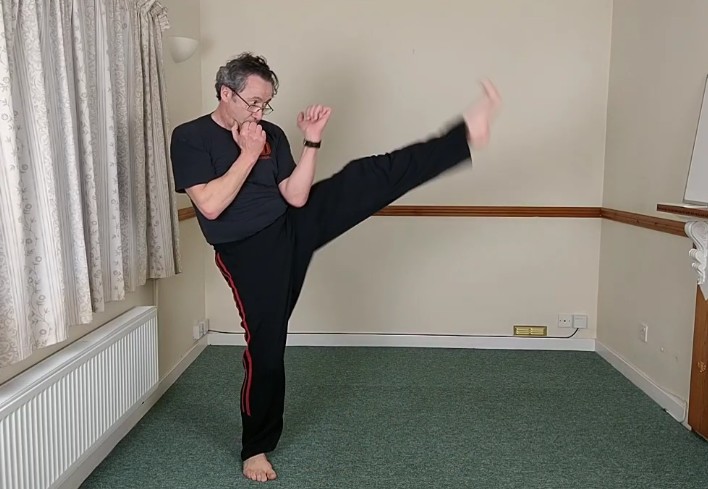
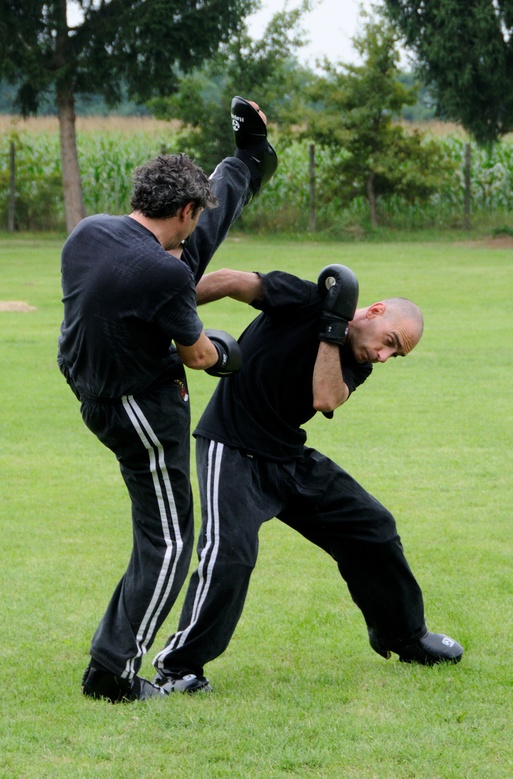
When I started karate and kick boxing, in the early eighties, it was noticeable a strong predominance in kicking techniques.  At that time people like Bill Wallace and Dominique Valera were dominating tournaments worldwide and most people entering competitions felt they had to be great kickers.  I remember my master going to seminars run by these legends of kick boxing and coming back with more and more tricks about strategies and combinations of kicks to be used in training and competitions.

Then, within a few years, a new generation of kick boxers started to populate the world.  These new people were not excellent kickers, not very flexible in the lower part of their body, so they started to develop techniques and strategies to use a minimum amount of kicks in any given fights while using more and more boxing techniques.

By definition a kick is a powerful technique: it delivers a lot more power and damage then a punch but it also uses a lot more energy and it’s usually slower.  These simple rules changed completely the trends in full contact and professional fights: in the last few years you can see all fights being dominated by good punching, a few round and front kicks and literally no much else.  In K1 or in MMA people tend to punch, kick and knee in the former or, often, looking for the grappling in the latter.

Nonetheless it’s nice to see that occasionally a good kicker enters the professional arena and when that happens he/she usually dominates for a some time, at least until a better kicker comes out or somebody studies very carefully how to avoid being kicked and defeat the kicker by using different techniques.

Posted under celebrities, styles, teaching, video_review

Written by massimo on 12 Oct 2008

Tags: , , , , ,

The Importance of Proper Warm Up

I am convinced that a proper warm up is an essential part of any martial art session: I see around many clubs that are quite informal about this part of training and they resolve the issue by telling students to “warm up”. People therefore chat away for 10-20 minutes while performing mild exercises that don’t really challenge any muscle and then they start training.

In the best cases these clubs are training people that are not fully ready for the next part of the class: some times this causes injuries and permanent damages and it is a good reason for putting many novices off martial arts training.

The purpose of warming up is to put body and mind in the best state to handle the rest of the training. The exercises done during warming up should improve both power as the source of speed and flexibility to reduce resistance resulting in agility and ease of movement.

As different martial arts express themselves in completely different ways it might be tricky to state what a proper warm up should be like.  Let’s then try to define what activities might be suggested according to the group of muscles used:

  1. Punching, particularly if at full contact against bags, pads and focusing mitts, requires proper conditioning of knuckles, wrists, elbows, shoulders and pectorals: press-ups or push-ups of various kind, with hands positioned at various angles can be a good way of warming up and conditioning that area.
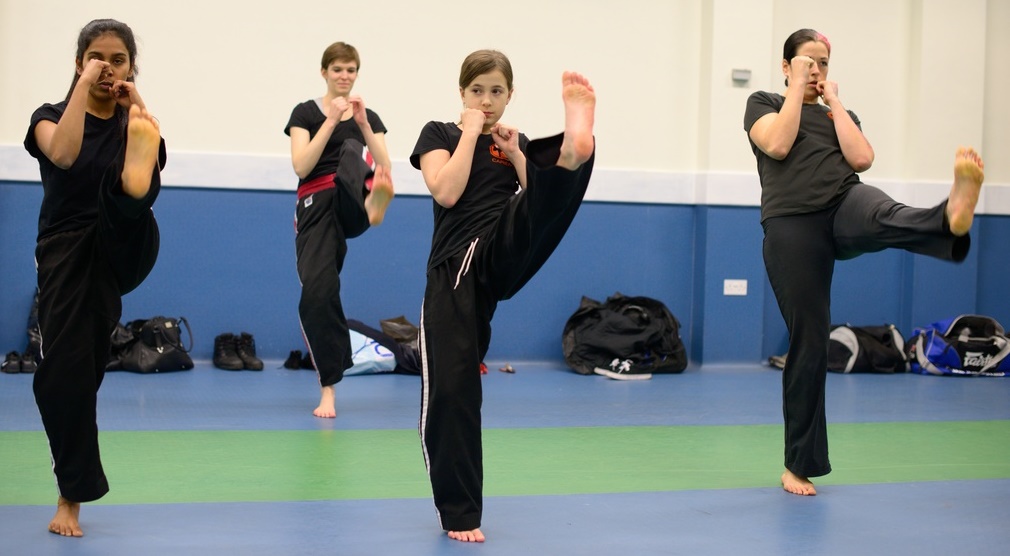
  2. In martial arts that use medium and high kicks people should pay serious attention to their legs’ flexibility performing a variety of stretching exercises than involve flexibility of the rear part of the legs, the internal adductors and the groin area.
  3. Throwing techniques require good core training that is also of great support to punches and kicks.  Recent physiology studies have demonstrated that the core area (torso, abdomen and part of the back) is responsible for delivering power in most movements.  The power that most traditional martial arts define as coming from the hips is in reality delivered by the core.
  4. The abdominal area is a very important part of the body. Abdominal muscles are the only protection against strikes for delicate organs like stomach and liver: there are no bones here like in the chest so a number of different abdominal exercises like sit-ups of various kinds should be performed on a regular basis.
  5. The whole spine is subject to a number of snapping and twisting movements following punches, kicks and throws: warm up and strengthening the back ensures no long term back injuries.

An average warm up should last between 15 to 45 minutes, taking into account the following criteria:

  • age of the students: younger pupils need shorter warm up than people in their forties or above;
  • the martial art practiced: Tai Chi can be a warm up in itself while Judo or Thai Boxing need very specific exercises;
  • students’ proficiency: beginners might have a progressive approach to warm up while professionals need a long and well structured one.

In my experience warming up is an integral part of martial arts practice and should occupy a significant portion of each class rather than being an optional activity.  Benefits are out of question and ensure safe and healthy practice to people that want to see martial arts training as part of their life for the long term.

Posted under educational, fitness, teaching, theory

Written by massimo on 6 Oct 2008

Tags: , , ,