Regular training to avoid injuries

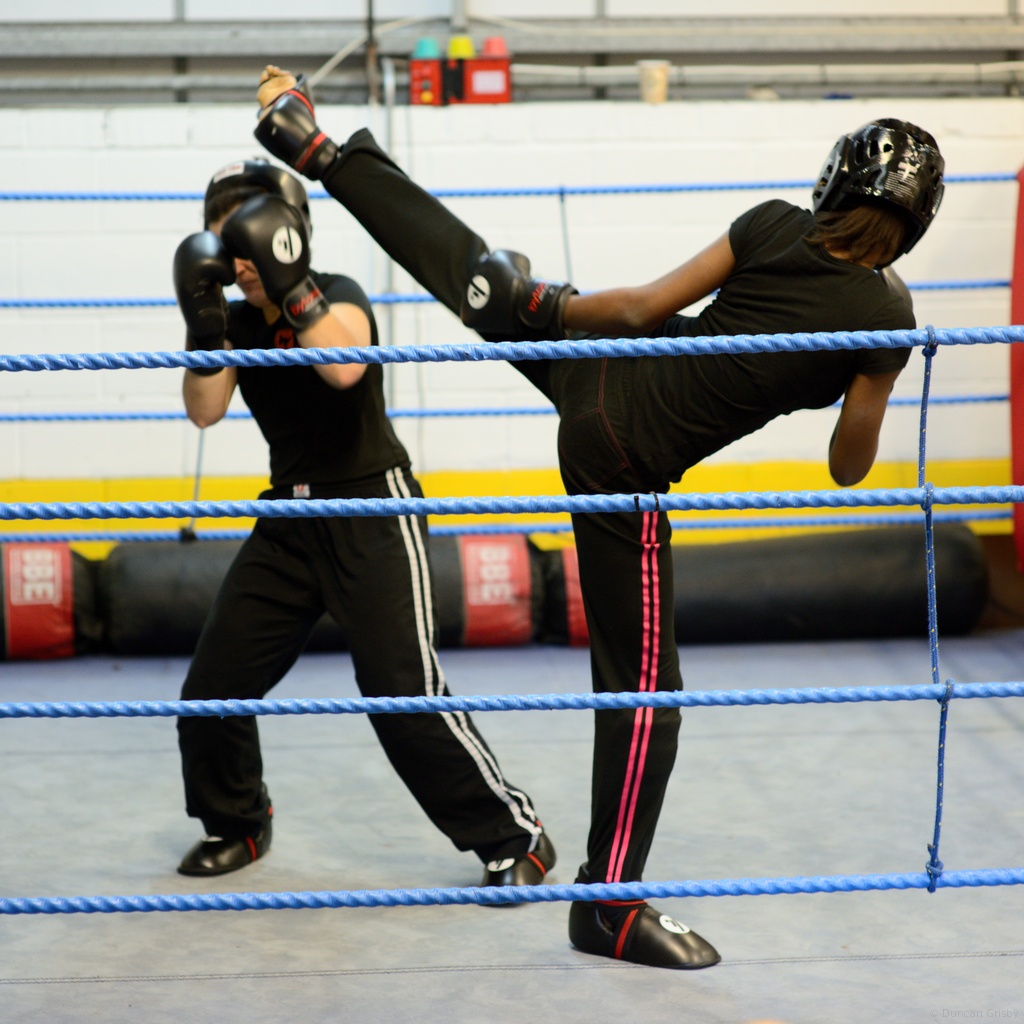
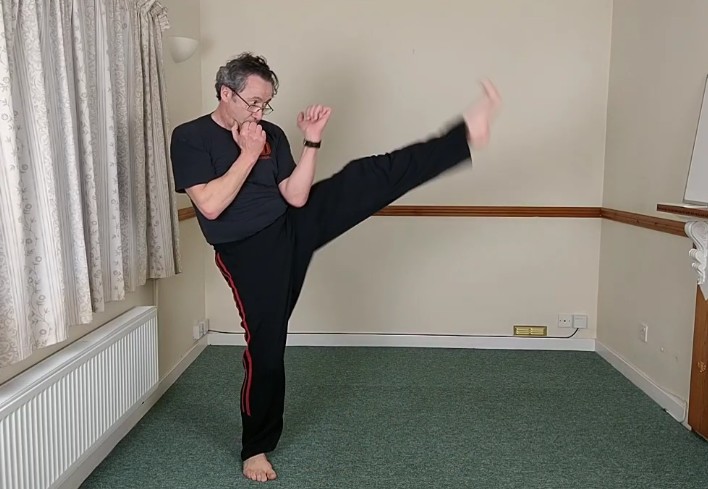
There are lots of people out there that play the occasional football or tennis match or spend a week per year skiing.  Most martial arts require a different approach and cannot be practiced occasionally if you want to enjoy the benefits that they can bring and avoid injuries.  While I adopted a regular, quasi religious training regime since I was a teen ager I see many of my students or other fellow martial artists having a very irregular training regime: I believe this can be the strongest cause of injuries and loss of motivation.

When you are at the beginning of your training you have a steady increase of performance in terms of speed, power, flexibility and, progressively, technique.  Your mind, as well as your muscles, get trained and they learn the subtle intricacies of how and when firing the right muscles in the appropriate time and order.  You can consider that some of the muscles used in certain techniques are not used much in our normal daily activities.  For the same reason these muscles have a stronger tendency to loose their performance when not used.

While in regular training you enjoy progresses in your training and this enjoyment is released in the form of endorphins that make you feel good.  If, for any reason, you stop training for a few days or weeks your muscles tend to loose some of their fitness.  When you try a technique that was nice and easy last time you did it you find yourself suddenly struggling with it or, if that happens in a self defence situation, risk your life in the process.

A regular practice for amateurs should be considered when training 2-3 sessions per week, possibly practicing all year round: each training session should be between 1 and 2 hours long.

Regular training to avoid injuries

Posted under educational

Written by massimo on 28 May 2010

Tags: , , ,

Some physics about martial arts

I found this video (see below) on you tube and it shows, supported by scientific evidence, a number of facts about what martial art deliver the strongest punch, kick and so on: the video is a National Geographic production and it’s very well made.

Here some of the facts that emerge:

  • Boxing delivers the strongest punch.  Boxing is solely based on punches so boxers continuously refine their techniques until is well polished and super powerful.  Another interesting aspect to consider is that there are many people that practice oriental martial arts for a number of reasons outside sport fighting.  Boxing on the other hand is for fighting and punching hard is part of the specs.
  • The power of any kind of strike is very much based on proper footwork and the co-ordination of the whole body.
  • The most powerful kick is a spinning back side kick: as know it is the combination of using the large groups of muscles from the leg and the bottom, together with a fast spinning action that adds momentum to the technique.
  • A knee strike from a professional Muay Thai fighter may deliver the same impact of being hit by a car travelling at 35 Mph.

I enjoyed watching this video that alternates real life scenes of martial artists striking a dummy in a lab, together with some computer graphics animations that show the physics of the impact while it’s happening.  There are also a few scenes from kung fu movies typically choreographed in Hong Kong style.

While I agree with the general conclusions shown in the video I would like to point out a main factor that makes it a bit unfair.  It is a fact that number people of similar size and body shape might have completely different muscle density and deliver very different results in term of strength and power when striking.  At the same time body weight plays a very strong role in the power delivered in a strike.

I don’t agree in measuring and comparing in absolute terms the over thousand pounds of strike from the boxer, to the lower result obtained by the kung fu master who is obviously much lighter than the rest of the people in the show.

Posted under educational, video_review

Written by massimo on 2 Dec 2008

Tags: , , ,

How Realistic is Your Training?

Considering that martial arts are, in essence, methodologies for fighting I always consider paramount to perform a reality check of each application. This is to assess if and when a technique or combination can be useful in a self defence or real fight situation.

Please notice that some styles, like kick boxing, tae kwon do and judo are to be considered martial sports and they follow rules that are designed to allow a sport competition to take place without causing serious injuries to those taking part in it. To some extend certain martial sports train full contact and a professional or a serious amateur of these is pretty safe in a fight as I recently mentioned in a previous post.

Certain styles that are pure martial arts, without sport applications, are meant to be useful for real fights and defending yourself. I am aware of a number of masters and instructors that remain pretty theoretical on the way they teach and assume that things will simply work: these people give a false, very dangerous, illusion to their students that risk to be seriously injured or killed in a real fight. It all good stating that one or the other technique will hurt an opponent, it’s another issue practicing it to ensure it works all the times.

So how do you perform a reality check? Here are some hints:

  • Have you tested your punches (or kicks, elbow or knee strikes) for real power?
  • The same strike might knock somebody down if applied to the head but just hurt a bit in certain areas of the body: did you consider that?
  • Have you considered how bad it could be hitting somebody in the face to find out that he hardly noticed the strike? What would you do then?
  • How much power do you think you need in order to knock somebody down or seriously injury them, allowing you to run away?
  • How would you react if somebody is charging you like a bull? Do you have a technique that would allow stopping or deflecting his attack?
  • Do you practice techniques that work at long, medium and short range? What about if the attacker is grabbing you?
  • Striking can be the non ideal solution sometimes. Do you practice techniques to seize the opponent and neutralizing him? Perhaps immobilizing him with a joint lock?
  • If you are below average the terms of body weight and size then you should consider training to defeat bigger people. What’s your body size compared to the average population?

I would be interested to hear comments about these issues.

Posted under educational, self defence, street fighting, teaching, theory

Written by massimo on 15 Jul 2008

Tags: , , ,

Is a puncher born?

This is a question I found this morning on Yahoo! answers. The following text was submitted by Bigchief and it reads as follows:

Well im a boxer.at our boxing club i was kind of surprised on who has the hardest punch.

During our bag drills we are asked to hit the bag during sets of 10, 20, 30, /// 30, 40, 50

Well we each get our turn to hold the bag when we are done, and during this time we hold the bag for the next guy. During this time i get a great understanding of the guys punching power.

Some of the boxers there who work out, and are kind of bulky , hit fairly hard, but not as hard as they look they would.
Some of the boxers who have muscle definition , but are not bulky hit just as hard.
What surprised me the most was that some of the boxers with little to no muscle definiton, hit the hardest.

This brings me to the belief that punchers are born, and muscle mass has little to no effect on power.

Id like to know if this is true, or if anyone else has had a different expierience , or if this is just a coincidence at my club.

And this is what I felt relevant answering:
In spite of the details about how bulky or defined each person is you are not specifying their weight: that can make a big difference in the power of their punches. Muscle mass and density will also have importance here, as some people are naturally stronger than others.

Punching power, given two punchers of equal weight, will depend in large measure from the overall body co-ordination when performing the action. A jab thrown using just arm and eventual shoulder power will have a certain level of power. On the other hand the same punch performed using the whole body, leaning toward the target even slightly and adding a half an inch step forward will result a lot stronger punch.

If you have access to a good coach he/she can teach you the concept in minutes: the point is then to practice it until it come natural, without thinking about the whole process.

I hope it can be as useful for you all.

Posted under theory, yahoo_answers

Written by massimo on 8 Jul 2008

Tags: , ,